Kill or Cure?
SERIES FOR THE BBC - 11 x 23-minutes Diseases that are no threat in developed nations claim tens of millions of lives every year in developing countries. Modern, effective treatments targeting affluent westerners are too expensive for the world’s poor. Old drugs are cheap but resistance is spreading very fast. In some cases the only drugs available kill up to one in 10 of the patients who take them. Kill or Cure covers the hunt for effective and affordable treatments for populations earning less than a few dollars a day. |
|
Kala Azar: Black Fever
23-minutes, 2008
Ref: 638
Watch Video
(Part One)
(Part Two)
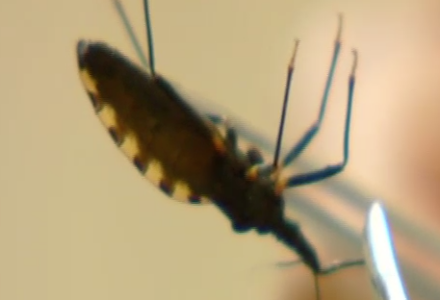
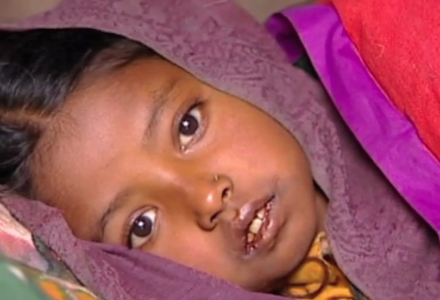
Three years ago the BBC's "Kill or Cure?" filmed the clinical trials in northern India for a drug to fight one of the world's most neglected diseases, Visceral Leishmaniasis. If caught, the disease (also known as Black Fever) is almost always fatal, but now a new drug has been licensed, tested and brought to the people of India by the Institute for OneWorld Health, and the hope is it will make a huge difference to the battle against one of the most deadly diseases in the world. "Kill or Cure?" returns to India to see what impact the new drug is having.
DOCUMENTARY OF THE YEAR, 2007, ON BBC WORLD
|
|
The Silent Killer
23-minutes, 2008
Ref: 639
Watch Video
Indian genetic pre-disposition to high blood pressure and the economic miracle of junk food mean that in the past 30 years hypertension has increased by about 30 times among urban dwellers and by about 10 times among the rural inhabitants. This is not an unusual experience among developing countries. In India, hypertension-linked Cardiovascular disease causes more than 2.5 million deaths; this is projected to double by the year 2020. Hypertension is directly responsible for 57% of all stroke deaths and 25% of all coronary heart disease deaths.
|
|
Tuberculosis: Upgrading Our Defences
23-minutes, 2008
Ref: 640
Watch Video
TB is a moving target. It’s a complex, mutating virus that is appearing in hundreds of different, drug-resistant strains. There are 16 different vaccines now undergoing trials – but how will we know which will quickly be made ineffective by TB’s extraordinary ability to change itself?
|
|
Thalidomide: A New Lease of Life?
23-minutes, 2008
Ref: 641
Watch Video
The Bete Noire of Big Pharma is making a comeback – this time as a treatment for Blood Cancers. Thalidomide is the drug best known for causing deformities in thousands of children in Europe and the USA, but in May 2006, the U.S. Food and Drug Administration approved thalidomide for use in combination with another drug, dexamethasone, to treat newly diagnosed multiple myeloma. Other Stage 3 trials should soon lead to new licenses for more cancers. Drug dosage is the key issue. We film with Paul Nichols at the New York marathon. He was diagnosed with cancer in 2002 and entered the Revlimid trial in January 2006. He has been in full remission since then and now takes the drug on a monthly prescription. For Paul, thalidomide is a miracle drug.
|
|
Cancer Wars
23-minutes, 2008
Ref: 642
Watch Video
Cutting edge research using the immune system and antibodies to fight cancer, part of cancer researchers’, like Awen Gallimore, dream that one day, with a little help, our bodies will cure themselves of cancer. And for some people some forms of immunotherapy are already being used to save their lives. Mike Grisenthwaite, with the help of revolutionary new drug Rituximab, has beaten non-hodgkins lymphoma an often fatal blood cancer that he never thought he would be safe from.
|
|
Rubella: Tomorrow's Children
23-minutes, 2008
Ref: 643
Watch Video
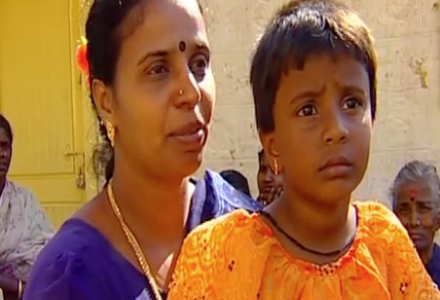
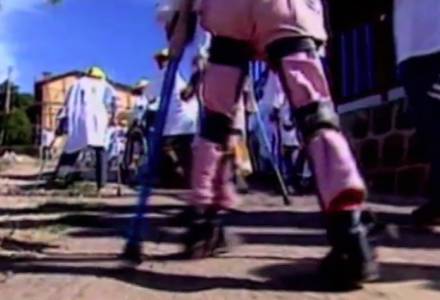
We travel to Poona in India where the very latest rubella vaccines are under development and we find out about the new methods of delivery and production. We filmed in the Dominican Republic in Central America where CRS is a major cause of disabilities. It's estimated that if rubella was brought under control in the Dominican Republic, it would save the country $65 million dollars. Rubella appears as a mild rash, but when caught by a pregnant woman, it has devastating consequences on the unborn child. With congenital rubella syndrome, or CRS, the child can end up deaf, partially blind and with heart and brain defects. In many poorer, developing countries CRS is a major problem.
|
|
Avian Flu: Preparing for the Pandemic
23-minutes, 2008
Ref: 644
Watch Video
The world stands on the edge of a flu pandemic, according to the world’s leading experts. The results, they predict, will be catastrophic. Millions of deaths, economies and civil society in chaos, political life undermined or destroyed. A doomsday scenario! Such outbreaks happen two or three times every hundred years. We are due one now – and the avian flu strain H5N1 is the most likely candidate for a future pandemic. The last catastrophic flu pandemic was in 1918, just after the Great War. No-one really knows, but it’s estimated it killed between 50 to 100 million people – more than twice as many as than died in the war itself. H1N1, the strain responsible for this worst epidemic in recorded history. Almost ninety years later, H5N1 – an avian flu strain – could do exactly the same thing. The challenge now is to develop a vaccine before the pandemic arrives. Kill Or Cure? has been given exclusive access to the laboratories, scientists and vaccine manufacturers who are working against the ‘molecular clock’ with a range of new technologies to prepare an effective vaccine.
|
|
Tetanus: The Infant Curse
23-minutes, 2008
Ref: 645
Watch Video
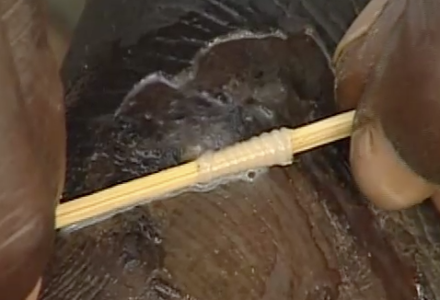
Every year thousands of babies die from a disease that strikes in the very first days or hours of life. Today tetanus affects only the world’s poorest and most remote communities – but it still claims the lives of about 150,000 babies every year. Poor hygiene and cultural traditions – like rubbing a mixture of soil and butter on a newly cut umbilical cord – gives the deadly bacteria the perfect opportunity to breed. “Kill or Cure?” goes to Ethiopia, where 14,000 babies die from tetanus every year.
|
|
A Vaccine for Dengue
23-minutes, 2008
Ref: 646
Watch Video
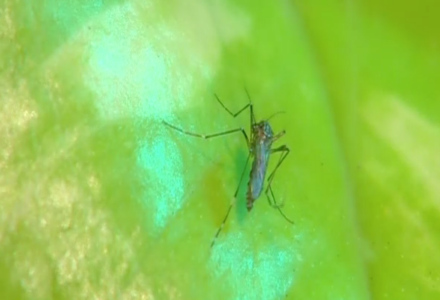
Dengue fever affects up to 100 million people every year, mainly children. It kills about 20,000 – and they die from what is known as dengue shock syndrome. The hunt is now on for a vaccine. Sanofi pasteur and GSK, two of the biggest drug companies in the world, have been working on a dengue fever vaccine for some time. Kill or Cure? goes to Thailand and Vietnam to see what progress is being made.
|
|
Meningitis: OUTBREAK
23-minutes, 2008
Ref: 647
Watch Video
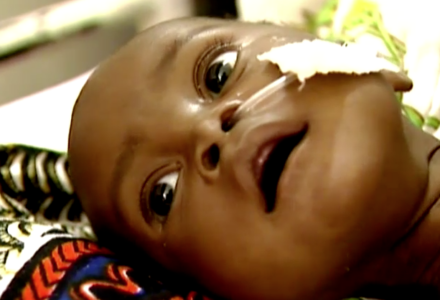
In March 2007, as a meningitis epidemic was raging in Burkina Faso, we filmed a poignant and revealing account of the devastating impact meningitis epidemics have on individuals, families, and communities. Meningitis is a deadly infection of the fluid surrounding the brain and the spinal cord. Thousands of cases are reported but many aren’t, meaning the true scale of the damage caused by the disease causes is far higher than is published. Routine reporting systems break down during epidemics, and many die before they can reach help. Those who survive it are often left with a damaged nervous system and a host of disabilities.
|
|
The Measles War
23-minutes, 2008
Ref: 648
Watch Video
Vaccinating children in developing countries can be hard work. It’s a huge challenge – especially when there are long distances to travel, there’s not enough staff and there is the need to keep vaccines at the right temperature . Trying to do it during a war or in times of conflict, when young lives are even more at risk, makes it almost impossible. “Kill or Cure?” goes to the Democratic Republic of the Congo, which is still recovering from a long and brutal civil war, to see how it’s done. Over 17,000 UN troops are still on duty in the Congo trying to keep the peace. It’s dangerous work. They have the highest casualty rate of any UN peace-keeping mission – last year alone eight solders were killed. We go with them on patrol and with the vaccination teams trying to bring measles under control.
|